Why cold, and why this cold specifically
At room temperature, cells run on the same biochemistry that ages every other part of the body, enzymes keep working, waste keeps accumulating, structures keep breaking down. Cooling slows all of that down. At −196°C, the temperature of liquid nitrogen's vapor phase, molecular motion is slow enough that biological and chemical processes essentially stop. Nothing is metabolizing, nothing is aging, nothing is degrading in any meaningful timeframe.
The problem cryopreservation actually solves
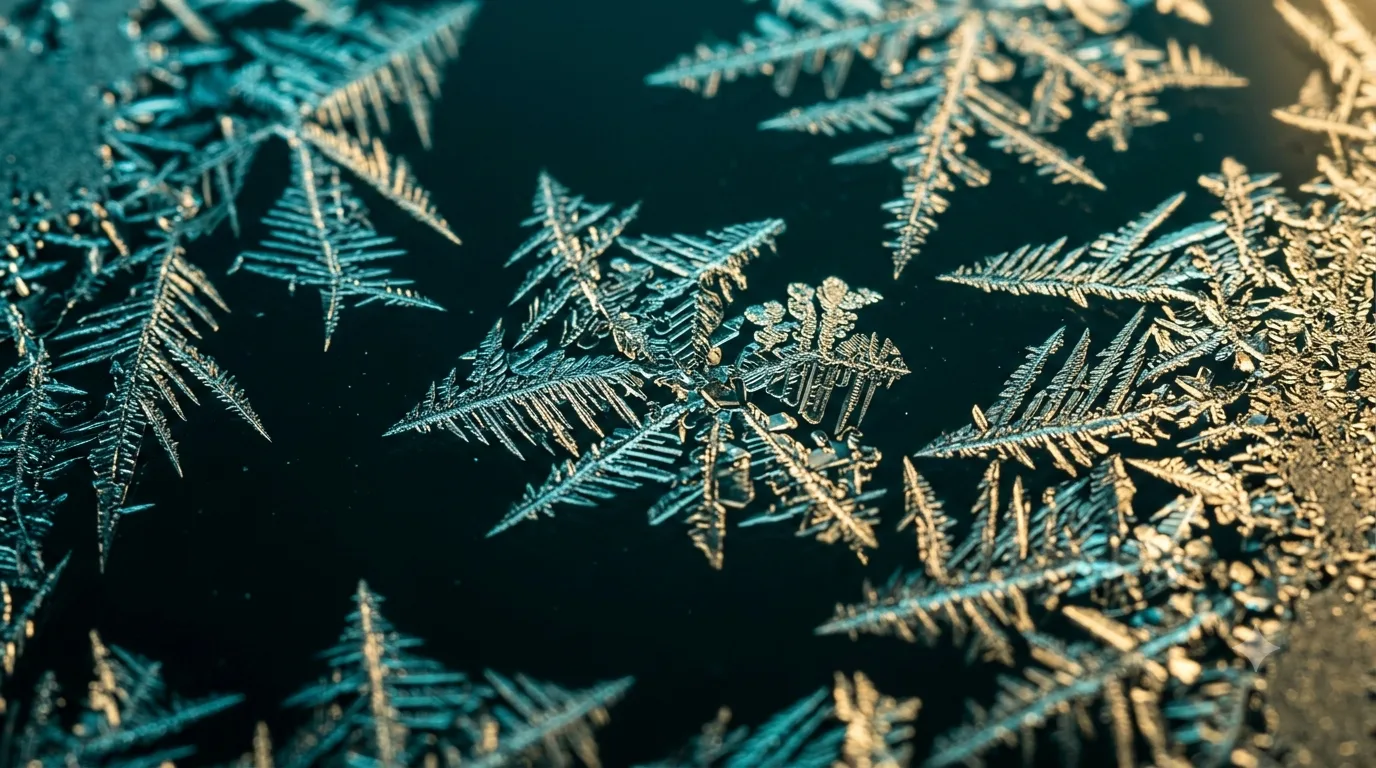
Cold isn't the hard part, ice is. Water inside and around a cell expands and forms sharp crystals as it freezes, and those crystals are what shred cell membranes and internal structures. A cell frozen carelessly doesn't survive being thawed. The entire discipline of cryobiology exists to prevent that one failure mode: get the temperature down without letting damaging ice crystals form in the process.
Controlled-rate freezing and cryoprotectant
Two techniques do most of the work. The first is a cryoprotectant, a solution that partially replaces water inside the cell and lowers its freezing point, similar in principle to antifreeze, which reduces how much ice can form in the first place. The second is controlled-rate freezing: cooling the sample gradually, often a set number of degrees per minute, rather than plunging it straight into deep cold. Slower, staged cooling gives water more opportunity to leave the cell before it solidifies, rather than freezing in place as damaging crystals.
The other half of the problem: warming, not just cooling
A point that gets skipped in most consumer explanations: getting a sample cold safely is only half the job. If a sample is warmed back up too slowly, the same kind of damaging ice crystals can form on the way up, a process called devitrification or recrystallization, even if freezing itself went perfectly. A cryopreservation protocol has to control both directions of the temperature curve, not just the descent.
Vitrification versus slow freezing
There are two broadly different strategies for avoiding ice damage. Slow freezing relies on gradual, staged cooling and cryoprotectant to let water leave the cell before it solidifies. Vitrification takes a different approach entirely, very high cryoprotectant concentration combined with extremely rapid cooling, fast enough that water solidifies into a glass-like state without forming crystal structure at all, rather than merely slowing crystal growth down. Each method has tradeoffs in cryoprotectant toxicity, cooling equipment, and the cell types it suits, this is an active area of cryobiology research, not a settled "one correct method."
What happens at the vault stage
Once a sample reaches vapor-phase nitrogen temperature, it's effectively in storage rather than in process. Vapor-phase systems keep material cold without full liquid immersion, which is generally preferred for long-term storage because it reduces cross-contamination risk between samples sharing a vault. From here, viability depends on the vault's own stability, consistent temperature, monitored redundancy, and undisturbed storage, rather than on anything actively happening to the sample itself. This is the same vapor-phase method our own lab in Muscat uses for every package we offer, from Gold through Royal.
What this doesn't guarantee
No storage method guarantees indefinite viability, and claims to the contrary should be treated skeptically. Controlled-rate freezing, vitrification, and cryoprotectant use are well-established techniques and the current basis for maximizing viability on thaw, but published viability figures vary significantly by cell and tissue type, so specific percentages quoted for one cell type shouldn't be assumed to carry over to another. Retention benchmarks for very long-duration storage are also still a developing area, and any bank should be plain about that rather than overselling certainty it doesn't have.
Further reading: Huang H et al., "Cryopreservation of Endothelial Cells in Various Cryoprotective Agents and Media - Vitrification versus Slow Freezing Methods," PLOS ONE 11(2):e0149660 (2016); Awan M et al., "Technologies for Vitrification Based Cryopreservation," Bioengineering 10(5):508 (2023).
This article is general-education content, not a scientific citation or medical advice. Specific claims made elsewhere on this site about cryopreservation are marked "citation pending" until a verified peer-reviewed source is attached and reviewed prior to any public launch.