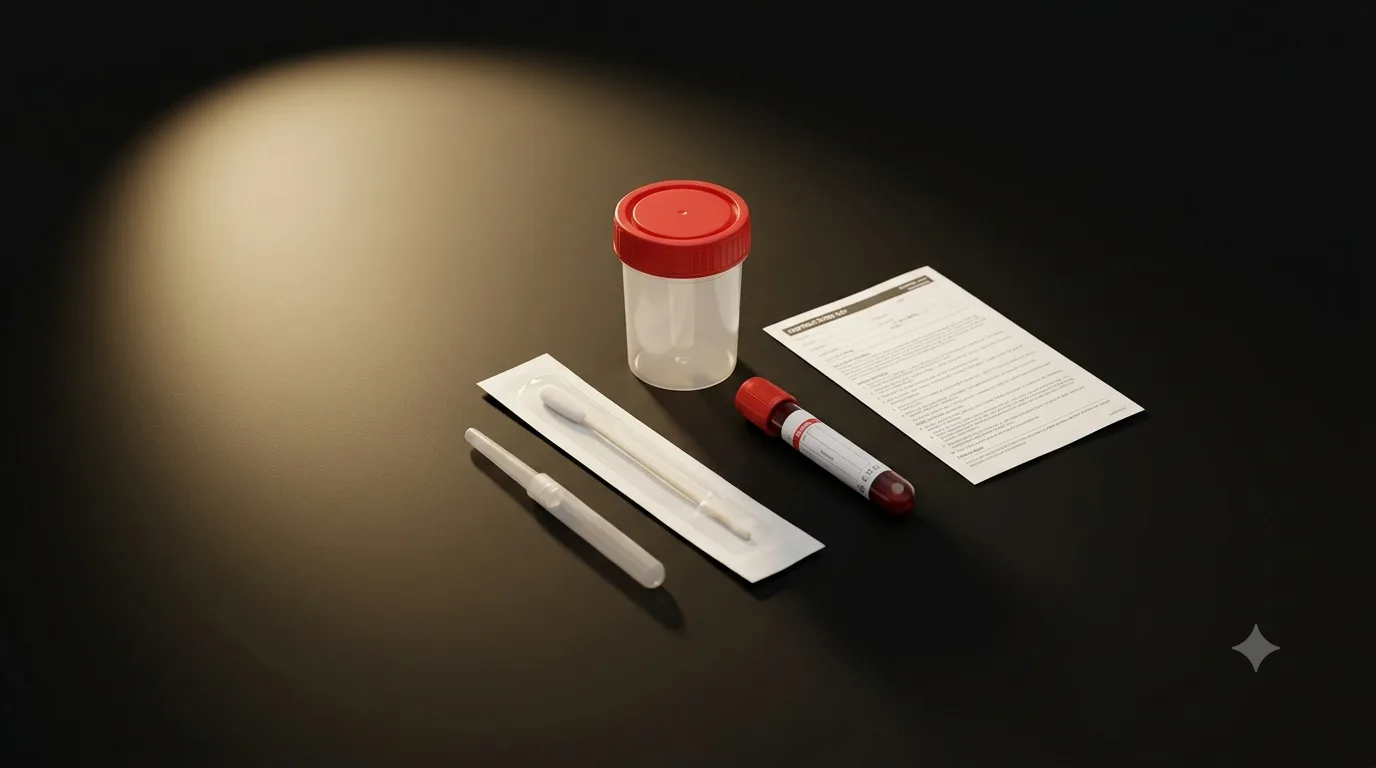
Stage one: kit dispatch
The process starts before your due date. A sterile, pre-labeled collection kit is sent to your home or your hospital ahead of delivery, sealed with chain-of-custody documentation. The point of this stage is traceability, under frameworks like the AATB Standards for Tissue Banking, every unit collected is assigned a unique ID for tracking from this point forward, so nothing about the sample's origin is ambiguous later.
Stage two: collection at birth
Once the cord is clamped and cut, a trained specialist collects the remaining cord blood and, if requested, a small section of cord tissue. This takes only a few minutes, is painless for both mother and baby, and doesn't interfere with your chosen birth plan, the procedure is compatible with delayed cord clamping and with cesarean delivery.
Stage three: monitored cold-chain transport
Once collected, the sample doesn't sit at room temperature. A dedicated courier carries it in temperature-logged, validated transport packaging, typically held around +4°C, from the delivery room to the processing laboratory, the kind of cold-chain integrity tissue-banking standards require for shipment. The "logged" part matters as much as the "cold" part, the goal is a continuous, auditable temperature record with no unmonitored gap between collection and the lab bench. Our own courier route ends at our MOH-licensed laboratory in Muscat, regardless of which hospital in Oman you deliver at.
Stage four: isolation and characterization
At the laboratory, hematopoietic stem cells are separated from the rest of the cord blood, assessed for viability and count, and staged for freezing. Depending on your package, additional tissue is processed the same way: cord tissue for Diamond and above, placental cells for Platinum and above, and amniotic membrane for Royal. This is also where the sample is characterized, confirming what was actually collected matches what was intended, before it's committed to cryoprotectant and controlled-rate freezing.
Stage five: vapor-phase vaulting
The final stage moves the sample into vapor-phase nitrogen storage across redundant, independently monitored vaults. "Redundant" here means the sample's continued storage doesn't depend on any single point of failure, vault, monitoring system, or power source. This is where active processing ends and long-term holding begins.
Why the documentation matters as much as the cold
None of these stages are useful in isolation. The value of the process is that it's continuous and documented end to end, a sample's condition at stage five should be traceable back through every prior stage, not just assumed. That's the actual function of "chain of custody": not a formality, but the only way to know a sample was handled correctly the whole way down.
Further reading: American Association of Tissue Banks (AATB), Standards for Tissue Banking, 14th Edition, aatb.org/standards.
This article describes general, industry-standard chain-of-custody practice that this company's process is designed around. The claim that collection is compatible with delayed cord clamping and cesarean delivery is common industry description but has not yet been checked against a verified clinical source, and should be confirmed with your own obstetric team before or during labor rather than assumed from this page. Specific timelines and procedural details are subject to change and require operational confirmation.